Macedonia Travel Guide: Skopje, Lake Ohrid & the Balkans' Best-Kept Secret
By Triprz Editorial Team | September 19, 2026
North Macedonia is Europe's most underrated travel destination — ancient lakes, Ottoman bazaars, Byzantine monasteries, and daily costs of $30-50. Here's everything you need to know.
Tags: Macedonia, North Macedonia, Skopje, Lake Ohrid, Balkans, Budget Travel, Destination Guide, 2026
Article
North Macedonia does not show up on most travelers' bucket lists. That is exactly why it should be on yours.

This is a country of fewer than two million people tucked between Greece, Bulgaria, Serbia, Kosovo, and Albania — a crossroads that has been trampled by Romans, Byzantines, Ottomans, and Slavs, each leaving layers of architecture, food, and faith. Yet it remains one of the least-visited countries in Europe. In 2023, the entire nation received roughly 1.5 million tourists — fewer than Dubrovnik gets in a single summer month.

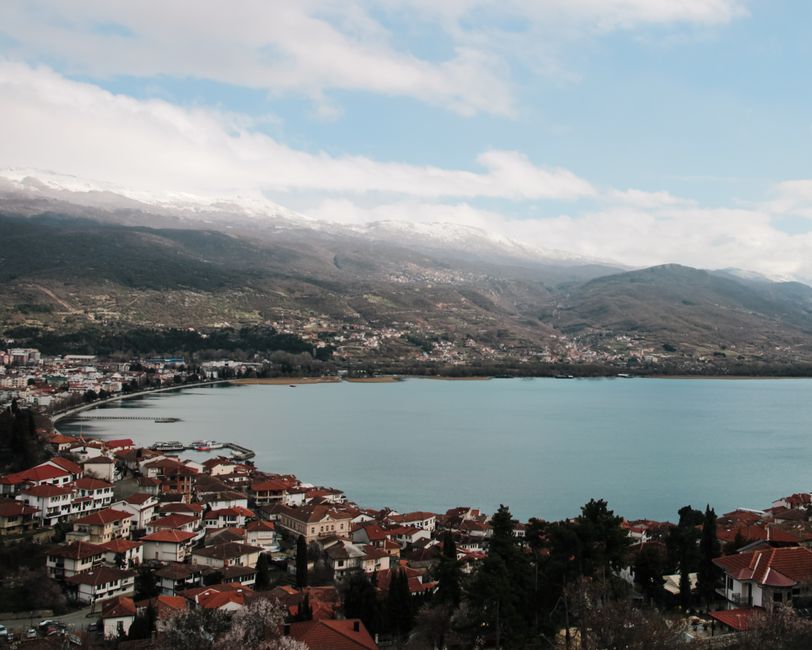
The payoff for arriving is enormous. You get a UNESCO-listed lake locals call the "Balkan Jerusalem," an Ottoman bazaar that has not been turned into a theme park, Byzantine churches with frescoes older than the Renaissance, mountain monasteries you can have to yourself, and a cuisine blending Turkish, Mediterranean, and Slavic traditions. And you can do all of it on $30-50 a day.

This guide covers everything you need to plan a 2026 trip: Skopje and its surroundings, Lake Ohrid in depth, transport, a seasonal breakdown, the top 10 things to do, a detailed cost table, practical tips, and honest advice on what is worth your time.

---

## Why North Macedonia Is Europe's Most Underrated Destination

Ask a seasoned traveler to name the best-value country in Europe, and if they know the Balkans, they will say North Macedonia. If they do not, they will say Albania or Montenegro — both wonderful, but both are now firmly on the backpacker trail and have the prices to prove it. Macedonia has somehow stayed under the radar despite offering comparable or better value.

Here is what makes it special:

**Layered history you can touch.** In Skopje, you can walk from a 6th-century Byzantine fortress through an Ottoman-era bazaar to a Brutalist post-earthquake city center in 20 minutes. In Ohrid, you stand in a 2,000-year-old Roman amphitheater, then walk to a medieval church perched on a cliff above a lake that is three to four million years old. In Bitola, Roman ruins sit beside a 19th-century diplomatic quarter. There is no velvet rope, no audio guide required, and rarely a queue.

**Genuine authenticity.** Much of the Balkans has been retrofitted for mass tourism. Skopje's Old Bazaar is still a working market where locals buy copper pots, wedding dresses, and baklava. Ohrid's churches are still in active use, not museum pieces. The mountain villages around Mavrovo and Krushevo have not been turned into open-air folk museums. You are visiting a living place, not a stage set.

**Absurd value for money.** A hearty lunch of kebapi with bread and salad costs $3-4. A private double room in a guesthouse runs $15-25. A three-hour intercity bus ride is $9. A boat trip on Lake Ohrid is $5. The Macedonian denar is not pegged to the euro, and the exchange rate works in your favor — roughly 61 MKD to the euro and 53 MKD to the US dollar.

**Small and manageable.** North Macedonia is roughly the size of the US state of Vermont. You can base yourself in Skopje and reach Ohrid, Bitola, Mavrovo National Park, and the wine region of Tikveš in two to four hours by car or bus. Nothing is far. The roads are generally good, and a one-week trip can comfortably cover the highlights.

---

## Skopje: The Quirky Capital

Skopje confuses first-time visitors and then wins them over. A 1963 earthquake destroyed most of the city, and the rebuilding produced concrete Brutalist blocks. Then, in the 2010s, the government launched "Skopje 2014," planting hundreds of neoclassical facades, bronze statues, and marble bridges across the center. The result is a city stitched from three eras: Ottoman, Yugoslav, and pretend-Parisian.

It should not work, but it does. Skopje is walkable, safe, cheap, and endlessly interesting. Plan at least two full days.

### The Old Bazaar (Stara Čaršija)

Cross the Stone Bridge from Macedonia Square and you enter the Old Bazaar — one of the largest surviving Ottoman markets in Europe, in continuous operation since the 12th century. This is the real Skopje: narrow cobblestone streets winding past artisan workshops, mosques, tea houses, and bakeries. Unlike many Balkan "old towns," this is not a tourist zone — local people shop here for copper cookware, wedding suits, and live poultry.

Spend half a day getting lost. Key stops: the Bezisten (covered Ottoman market), the 15th-century Mustapha Pasha Mosque, Kapan An (a former caravanserai with cafes and shops), and the Suli An (housing the Museum of the Old Bazaar). For food, grab burek and yogurt for under $3, or try a traditional mehana serving tavče gravče, grilled meats, and Shopska salad.

### Kale Fortress

On a hill overlooking the Old Bazaar sits Skopje Fortress, or Kale. Fortified since the 6th century, the current walls date mostly to the 10th and 11th centuries with Ottoman additions. Free to enter, it offers the best panoramic views of the city — the Vardar River, the Stone Bridge, Macedonia Square, and Mount Vodno to the south. Come at

[...]
Back to Blog | Back to Triprz