Destination of the Day: Bariloche, Argentina
By Triprz Editorial Team | October 29, 2026
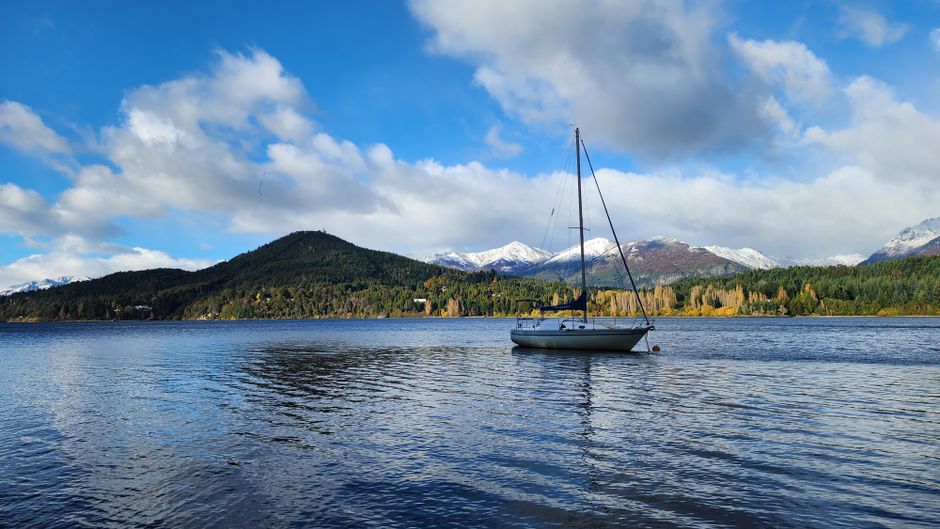
Bariloche is the gateway to Nahuel Huapi National Park, Argentina's oldest, with Swiss-chalet architecture, chocolate shops, and Andean peaks on the shore of Lago Nahuel Huapi.
Tags: Bariloche, Argentina, Destination of the Day, Travel Guide, 2026, mild, South America
Article
## Why Bariloche?

San Carlos de Bariloche — usually just called Bariloche — sits on the shore of Nahuel Huapi Lake in Argentina's Patagonia, framed by the snow-capped peaks of the Andes. It's the gateway to [Nahuel Huapi National Park](https://www.parquesnacionales.gob.ar/areas-protegidas/region-patagonia-norte/pn-nahuel-huapi/), Argentina's first national park, established in 1934, and the largest in the country at 7,050 km². The city was founded in 1902 and grew around a Swiss-German immigrant community whose influence is still visible in the chocolate shops, wooden chalets, and beer gardens lining the main street.

The tagline captures it well: Bariloche is **lakes, peaks, and chocolate**. The landscape is the main draw — glacial lakes in impossible shades of blue, forested islands, and mountain trails that switch from sub-Antarctic rainforest to alpine tundra within a single hike. The city itself has a resort-town feel, with a population of about 130,000 that swells dramatically during the July ski season and the December–February summer holidays. What makes Bariloche worth the journey is the **proximity of wilderness to town** — you can be on a mountain trail 20 minutes after leaving your hotel, and the national park's most scenic drives and viewpoints are accessible by public bus.

The vibe is authentic. This is a working Argentine city, not a purpose-built resort. You'll share the lakefront with local families, eat at parrillas where the asado is taken seriously, and buy chocolate from shops that have been in the same families for three generations. International tourists are a minority outside the brief high-season windows — most visitors are Argentines from Buenos Aires.

**Rating: 4.5 / 5** — one of South America's great nature destinations, with genuine local character.

## Top 5 Things to Do

### 1. Drive the Circuito Chico

The [Circuito Chico](https://www.bariloche.org/circuito-chico/) is a 65 km scenic drive that loops through the most photogenic section of Nahuel Huapi National Park. It passes Playa Bonita, the Llao Llao Hotel and Peninsula, Puerto Pañuelo, and the short hike to Mirador Lago Escondido. You can drive it in a rental car, take bus line 20, or — best of all — cycle it on a rented bike from Kilómetro 18. The road is paved and gently rolling. Allow a full day with stops. The viewpoint at Mirador Cerro Campanario (chairlift or 20-minute hike) gives a 360° panorama of seven lakes.

### 2. Ride the Cerro Catedral Cable Car

[Cerro Catedral](https://www.catedralaltapatagonia.com/) is South America's largest ski resort, with 53 runs and 1,200 metres of vertical drop. In winter (June–September), it's a full ski operation; in summer, the cable car (telecabina) and chairlift run for sightseers and hikers. The summit at 2,100 metres gives views across Nahuel Huapi Lake to Tronador, an extinct volcano on the Chilean border. A summer cable car + chairlift round trip costs about 40,000 ARS ($35). Hiking trails from the top connect to Refugio Frey, one of the classic Patagonian day hikes.

### 3. Hike to Refugio Frey

The [Refugio Frey hike](https://www.alltrails.com/trail/argentina/r-o-negro/refugio-frey-via-cerro-catedral) is a 20 km round-trip trail from the Cerro Catedral base that climbs through lenga forest to a mountain refuge at 1,700 metres, set beside a small tarn with granite spires rising behind it. It's the most popular full-day hike from Bariloche — about 7–8 hours with a break at the refugio, which serves hot food and has dormitory beds. The trail is well-marked but steep in sections.

### 4. Visit the Nahuel Huapi Lake Islands

Several islands in Nahuel Huapi Lake are accessible by boat from Puerto Pañuelo. [Isla Victoria](https://www.parquesnacionales.gob.ar/areas-protegidas/region-patagonia-norte/pn-nahuel-huapi/isla-victoria/) is the largest — 31 km² of forest, hiking trails, and a former forestry settlement. Boats also stop at the Bosque de Arrayanes, a grove of cinnamon-barked myrtle trees (arrayán) that grow nowhere else in the world in such density. A combined island + Arrayanes boat tour costs about 50,000–80,000 ARS ($45–70) depending on operator and season.

### 5. Eat Chocolate on Mitre Street and Asado at a Parrilla

Bariloche's chocolate industry dates to the 1930s, when European immigrants brought their recipes. [Avenída Mitre](https://www.bariloche.org/chocolates/) — the main commercial street — is lined with chocolate shops, and the three most famous are [Rapa Nui](https://www.rapanui.com.ar/), [Mamuschka](https://www.mamuschka.com/), and Abuela Goye. Each offers free samples and a café. For the other side of Argentine food culture, eat at a parrilla — try [El Boliche de Alberto](https://www.elbolchedealberto.com.ar/) or La Parrilla de Tony. A mixed asado (short ribs, chorizo, morcilla) for two costs about 30,000 ARS ($26) — a fraction of what the same meal would cost in Buenos Aires.

## When to Go

Bariloche has four distinct seasons thanks to its Andean lati

[...]
Back to Blog | Back to Triprz