Destination of the Day: Aswan, Egypt
By Triprz Editorial Team | October 10, 2026
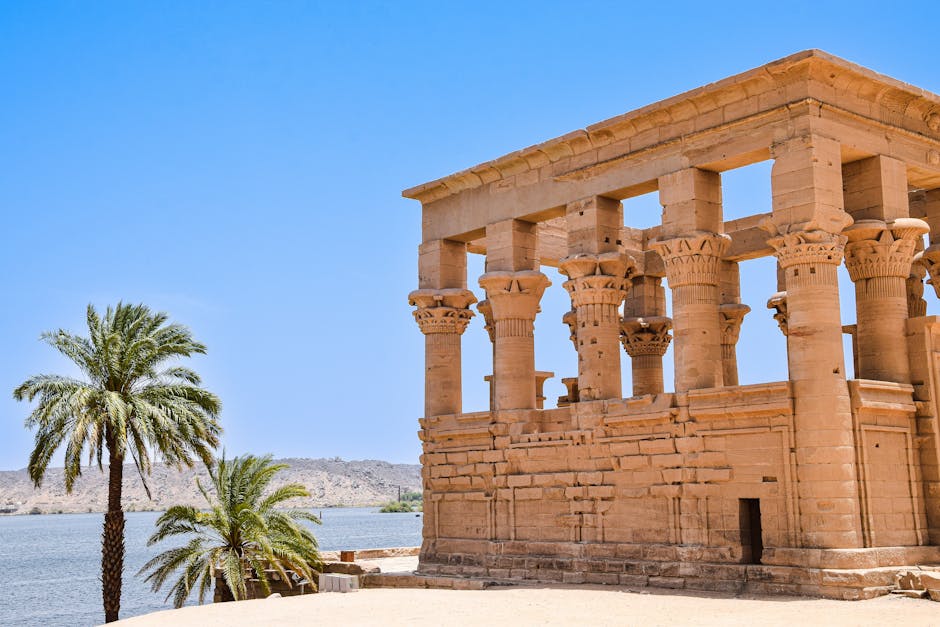
Aswan guards the southern gateway of Egypt on the Nile, where ancient Nubian culture, river islands with Pharaonic temples, and the monumental High Dam meet beneath the desert sun.
Tags: Aswan, Egypt, Destination of the Day, Travel Guide, 2026, hot, North Africa
Article
## Why Aswan?

Aswan is where Egypt ends and Nubia begins. Located at the first cataract of the Nile — the series of rocky rapids that marked the ancient southern frontier of Egypt — it has been a border town, a trade hub, and a garrison for over 4,500 years. The ancient Egyptians called it Swenett, and from here they traded gold, ivory, ebony, and incense with the kingdoms to the south and launched expeditions into Nubia. Today, Aswan is the most African of Egypt's cities: the Nubian population, with its own language, architecture, and traditions, gives the town a character distinct from Cairo or Alexandria. The pace is slower, the air is cleaner, and the Nile here runs wide and blue between granite boulders and palm-covered islands.

The modern city is shaped by the Aswan High Dam, completed in 1970 — one of the largest engineering projects of the 20th century. The dam tamed the Nile's annual floods, created the 550-kilometer Lake Nasser, and generated the hydroelectric power that modernized Egypt, but it also displaced tens of thousands of Nubians and submerged countless ancient sites under the reservoir. The international rescue campaign to save the temples of Abu Simbel and Philae from the rising waters — dismantling and reassembling them stone by stone on higher ground — was one of the greatest archaeological operations in history, undertaken by UNESCO between 1960 and 1980.

What draws travelers today is the combination of ancient wonders and natural beauty. The Nile at Aswan is at its most picturesque — dotted with islands, fringed by palm groves, and sailed by traditional feluccas whose white triangular sails have barely changed in 2,000 years. The winter climate is dry and warm when Europe is freezing, making Aswan a century-old winter retreat. It is also the base for cruises to Luxor to the north and to the temples of Abu Simbel to the south, near the Sudanese border.

## Top 5 Things to Do

1. **Sail to Philae Temple** — The Temple of Isis at Philae is one of the most romantic ancient sites in Egypt. Dedicated to the goddess Isis, it was rescued from the rising waters of Lake Nasser in the 1970s and rebuilt on the nearby island of Agilkia. You reach it by small boat, gliding across the Nile as the temple's columns emerge from the palm trees. Visit at night for the Sound and Light Show, when the reliefs are dramatically illuminated.

2. **Visit Abu Simbel** — The twin temples of Ramses II, carved directly into a mountainside in the 13th century BC, were the crown jewel of the UNESCO rescue campaign. The four colossal seated statues of Ramses — 20 meters tall — guard the entrance, and twice a year (February 22 and October 22) the rising sun penetrates the sanctuary to illuminate the inner sanctum statues. It is a 3.5-hour drive or a short flight from Aswan.

3. **Ride a felucca to Elephantine Island and the Botanical Garden** — A felucca sail on the Nile is the essential Aswan experience. Drift past Elephantine Island (ancient Abu, site of a Nilometer and the ruins of a predynastic settlement), the Nubian villages of the west bank, and Kitchener's Island, where Lord Kitchener transformed a Nile island into a lush botanical garden in the 1890s with species imported from across the British Empire.

4. **Explore a Nubian village** — On the west bank, villages like Gharb Soheil preserve traditional Nubian culture — mud-brick houses painted in vivid geometric patterns, courtyards full of camels and crocodile hatchlings (kept as protective totems), and families serving Nubian food and hibiscus tea (karkadeh). It is a rare chance to experience a living culture that predates the Arab conquest of Egypt.

5. **Tour the Aswan High Dam and the Unfinished Obelisk** — The High Dam itself is an awe-inspiring piece of 20th-century engineering — the view from the top shows the stark contrast between Lake Nasser to the south and the green Nile valley to the north. Just south of the city, the Unfinished Obelisk still lies in its ancient quarry, abandoned when a crack appeared during carving — had it been completed, it would have been the largest obelisk ever cut, weighing nearly 1,200 tons.

## When to Go

Aswan is one of the hottest cities in the world. Summer temperatures regularly exceed 40 degrees from May to September, with the highest recorded at a searing 51 degrees — shade and air-conditioning are essential. The winter from November to February is the ideal time: dry, sunny, and warm with daytime temperatures of 23–28 degrees and cool, refreshing nights. This is peak tourist season. The shoulder months of March, October, and November are also good — warm but not unbearable, with fewer crowds than winter. Avoid June through August unless you can tolerate extreme heat.

| Season | Months | Temp (°C) | Conditions |
|--------|--------|-----------|------------|
| Winter (peak) | Nov–Feb | 23–28 | Dry, sunny, cool nights |
| Shoulder | Mar, Oct, Nov | 28–35 | Warm, manageable, fewer crowds |
| Summer (extreme) | M

[...]
Back to Blog | Back to Triprz