Destination of the Day: Amman, Jordan
By Triprz Editorial Team | October 4, 2026
Amman layers Roman ruins, Ottoman souks, and modern Levantine energy across seven hills — the perfect base for exploring Jordan.
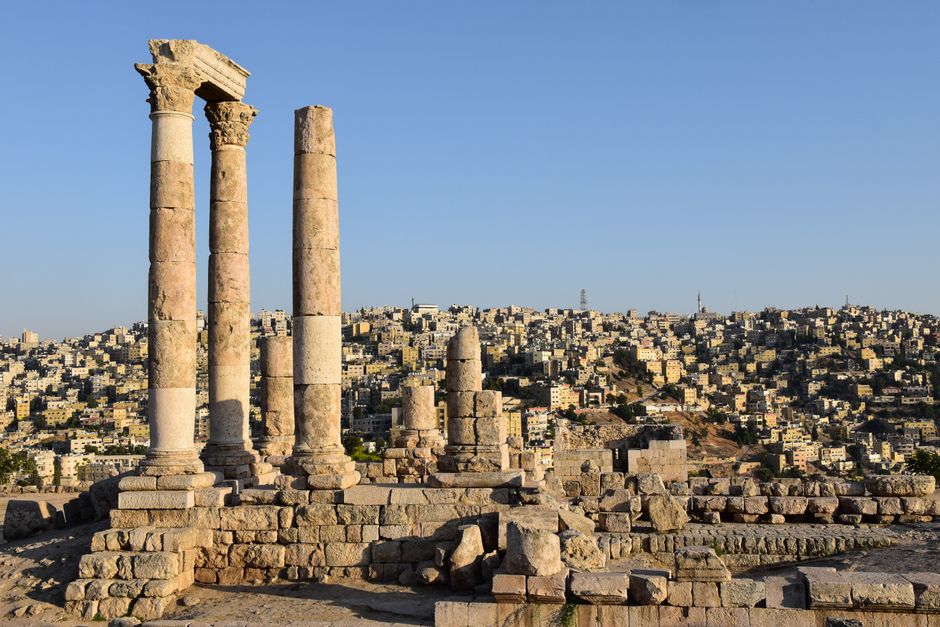
Tags: Amman, Jordan, Destination of the Day, Travel Guide, 2026, hot, Middle East
Article
## Why Amman?

Amman is a city built in layers — literally. Beneath the modern capital of the Hashemite Kingdom of Jordan lie the bones of ancient *Philadelphia*, a Roman city of the Decapolis, which itself rose on the ruins of *Rabbath Ammon*, the capital of the Ammonite kingdom mentioned in the Old Testament. Nearly every construction project in the city unearths something: a Roman cistern, a Byzantine mosaic, an Ottoman water channel. The past is not preserved behind glass here; it is the foundation the city stands on.

Modern Amman sprawls across 19 (originally seven) limestone hills in the arid highlands north of the Dead Sea, its cream-colored buildings blending into the rocky terrain so completely that the city appears to grow out of the earth itself. The downtown area, anchored by the ancient Citadel and the magnificent Roman Theater, is the historic core — a compact valley of souks, hash cafes, and falafel shops where the call to prayer echoes off 2,000-year-old walls. Above and around it, modern neighborhoods like Abdali, Jabal Amman, and Sweifieh hum with cafes, galleries, and startups.

What makes Amman compelling beyond its archaeology is its role as the region's safest and most stable crossroads. Jordan has absorbed waves of Palestinian, Iraqi, and Syrian refugees over decades, and Amman has become a cosmopolitan Levantine hub where you can eat Iraqi masgouf, Palestinian maqlouba, and Syrian shawarma within a few blocks of each other. It is also the ideal base for exploring Jordan's wonders — Petra, Wadi Rum, the Dead Sea, and Jerash are all accessible as day or overnight trips.

## Top 5 Things to Do

1. **Explore the Amman Citadel** — Perched on Jabal al-Qala'a, the city's highest hill, this fortified site has been occupied for over 7,000 years. Highlights include the Temple of Hercules (with fragments of a colossal statue), the Umayyad Palace, and the Jordan Archaeological Museum, home to the 9,000-year-old 'Ain Ghazal statues — some of the oldest human statues ever found.

2. **Watch a performance at the Roman Theater** — This 6,000-seat theater, carved into the hillside in the 2nd century CE during the reign of Antoninus Pius, is still used for events today. Two small museums — the Folklore Museum and the Museum of Popular Traditions — sit in the flanking vaults.

3. **Get lost in the Downtown Souk** — The streets around King Faisal Square and Al-Balad pulse with spice sellers, goldsmiths, clothing stalls, and bakeries. It is the most authentic slice of old Amman — loud, crowded, and utterly absorbing.

4. **Visit the Jordan Museum** — Opened in 2014, this is the country's flagship museum, housing the Dead Sea Scrolls (the Copper Scroll and some of the oldest manuscripts), early writing from Deir Alla, and comprehensive exhibits on Jordan's archaeological heritage.

5. **Eat your way through Rainbow Street** — This hip strip in Jabal Amman is lined with cafes, bookshops, and restaurants. Try Iraqi masgouf (grilled fish) at a traditional spot, or modern Jordanian fusion at one of the new-generation restaurants that have made Amman a rising food destination.

## When to Go

Amman sits at about 800 meters elevation, giving it a surprisingly mild climate for the region — far more comfortable than the Jordan Valley or Aqaba. Spring (March to May) brings wildflowers and green hills, with temperatures between 15 and 25 degrees Celsius. Autumn (September to November) is equally pleasant, with warm days and cool evenings. Summer (June to August) is hot but bearable, usually staying under 35 degrees, while winter (December to February) can be cold and occasionally sees snow, with temperatures around 5 to 10 degrees.

| Season | Months | Temp (°C) | Conditions |
|--------|--------|-----------|------------|
| Spring | Mar–May | 15–25 | Green, blooming, ideal |
| Summer | Jun–Aug | 25–35 | Hot, dry, manageable |
| Autumn | Sep–Nov | 18–27 | Warm, pleasant, ideal |
| Winter | Dec–Feb | 5–10 | Cold, occasional snow |

## Daily Costs

Jordan is pricier than its neighbors — subsidies are fewer, and the country imports much of its food and fuel — but Amman remains reasonable compared to Gulf cities. The Jordan Pass (a pre-purchased package including visa fee and Petra entry) can save significant money if you plan to visit Petra.

| Category | Budget | Mid-Range |
|----------|--------|-----------|
| Accommodation | $15–30 (hostel/guesthouse) | $60–100 (3-4 star hotel) |
| Food | $8–15 (falafel, shawarma, local) | $25–40 (restaurants) |
| Transport | $3–6 (taxis, local buses) | $15–25 (private taxi/Uber) |
| Attractions | $10–15 (Citadel, museums) | $70–80 (Jordan Pass with Petra) |
| **Total/day** | **~$50** | **~$100–140** |

## Getting Around

Amman's hills make it a city of winding roads and steep staircases — not the easiest to navigate, but manageable. There is no metro system, but ride-hailing apps (Uber and local Careem) are widely available and affordable. Traditional white taxis are cheaper but oft

[...]
Back to Blog | Back to Triprz