Destination of the Day: Al Ula, Saudi Arabia
By Triprz Editorial Team | September 30, 2026
Al Ula is Saudi Arabia's flagship heritage destination, home to Hegra, the Nabataean rock-cut city that was the kingdom's southern capital, plus dramatic desert canyons and 7,000 years of rock art.
Tags: Al Ula, Saudi Arabia, Destination of the Day, Travel Guide, 2026, hot, Middle East
Article
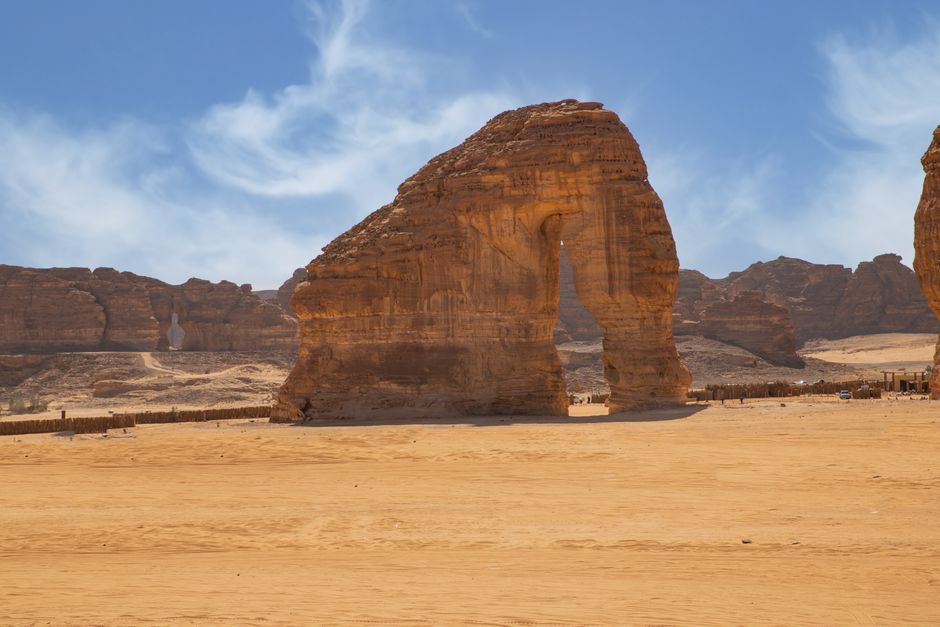
Saudi Arabia's Nabataean rock city of Hegra.

---

## Why Al Ula?

For most of the last century, Al Ula was effectively closed to the outside world. The rock-cut tombs of Hegra, also known as Madain Salih, were carved by the Nabataeans, the same civilization that built Petra in Jordan, but Saudi Arabia restricted access to the site for religious and conservation reasons. When Hegra was inscribed as Saudi Arabia's first UNESCO World Heritage Site in 2008, and when the Kingdom opened tourist e-visas in 2019, Al Ula suddenly became one of the most consequential archaeological destinations to open in a generation.

The numbers are staggering. Hegra contains 111 monumental Nabataean tombs carved into sandstone outcrops, many with elaborate facades bearing inscriptions that have helped scholars decode the Nabataean language. It was the southern capital of the Nabataean kingdom, a trading hub for frankincense and myrrh on the incense road that linked Arabia to the Mediterranean. The tombs date mostly from the 1st century BCE to the 1st century CE, and unlike Petra, you will often have them almost to yourself.

But Al Ula is more than Hegra. The wider region is a living museum of human history spanning more than 200,000 years. Jabal Ikmah is an open-air library of inscriptions in Dadanitic, Aramaic, and Nabataean. The old town of Al Ula itself, made of mud-brick houses, was inhabited continuously until the 1980s. The rock art at Jabal Ikmah and nearby sites depicts lions, cattle, and hunters from thousands of years ago. The Royal Commission for AlUla (RCU) is now investing billions to develop the site sensitively, with Maraya, a mirrored concert hall holding the world record for largest mirrored building, as the spectacular centerpiece.

## Top 5 Things to Do

1. **Tour the Nabataean Tombs of Hegra** — The flagship site: 111 rock-cut tombs spread across a desert landscape. Do not miss Qasr al Farid, the largest and most ornate single tomb, standing alone in its own outcrop, and the Jabal al Banat cluster of 29 female tombs.

2. **Read the Inscriptions at Jabal Ikmah** — Called the "open-air library," this rocky outcrop holds hundreds of inscriptions, some over 2,000 years old, in Dadanitic and other ancient scripts. It is one of the most important epigraphic sites in the Arabian Peninsula.

3. **Explore the Old Town of Al Ula** — A maze of mud-brick houses abandoned in the 1980s when residents moved to the new town. Restoration is ongoing, but you can wander the narrow alleys and see how life was lived for centuries.

4. **Visit Maraya and the AlUla Old Town** — Maraya ("mirror" in Arabic) is a fully mirrored cube that reflects the desert, holding a 500-seat auditorium that has hosted concerts by Yanni and Andrea Bocelli. It is a stunning piece of contemporary architecture in an ancient setting.

5. **Drive Through the Elephant Rock and Sharaan Nature Reserve** — Jabal al Fil, or Elephant Rock, is a natural sandstone formation that looks like a seated elephant. The surrounding Sharaan Reserve offers desert drives, canyons, and red-rock landscapes reminiscent of the American Southwest.

## When to Go

Al Ula sits in the desert at roughly 700 meters elevation, meaning hot days and cool nights year-round. The best time to visit is March to May and September to November, when daytime highs are pleasant (24–32 degrees Celsius) and the evenings are crisp enough for stargazing. Winter (December to February) is also excellent and cooler. Summer (June to August) is brutally hot, often exceeding 40 degrees, and most outdoor activity shifts to early morning or after sunset.

| Season | Months | Avg High | Notes |
|--------|--------|----------|-------|
| Spring | Mar–May | 26–32°C | Ideal, wildflowers possible |
| Summer | Jun–Aug | 38–43°C | Extreme heat, limited daytime |
| Autumn | Sep–Nov | 25–33°C | Ideal, clear desert skies |
| Winter | Dec–Feb | 18–22°C | Cool, excellent for hiking |

## Daily Costs

Al Ula is more expensive than other Saudi destinations because of its remote location and premium positioning, but it is still far cheaper than comparable heritage sites in the Gulf.

| Category | Budget (per day) | Mid-Range (per day) |
|----------|------------------|---------------------|
| Accommodation | $50–90 (guesthouse, camps) | $150–300 (resort, Banyan Tree) |
| Food | $20–35 (local restaurants) | $50–90 (hotel dining) |
| Transport | $20–40 (shared tours, bus) | $80–150 (rental car, private guide) |
| Activities | $30–60 (Hegra, Jabal Ikmah entry) | $100–200 (all sites, guided tours) |
| **Total** | **$120–225** | **$380–740** |

## Getting Around

Al Ula has no public transit, and the sites are spread across a large desert area, so a rental car or organized tour is effectively mandatory. The recently opened AlUla International Airport (ULH) has direct flights from Riyadh, Jeddah, and Dubai. Within the area, the Royal Commission operates a hop-on-hop-off shuttle to the main sites, and licensed tour operators run 4

[...]
Back to Blog | Back to Triprz